Hongsen products / Product structure and use
How the CS-XL-03 Supports Its Horizontal Clamp Arm
Follow the CS-XL-03 clamp arm from its paired sleeve collars and diagonal brace to the separate bicycle jaw handle.
The CS-XL-03 holds its horizontal clamp arm in a sleeve with two collar levers, supported by a diagonal brace beneath. The clamp sits beyond that sleeve, away from the upright. This layout separates the bicycle contact area from the junction that joins the arm to the main column.
The CS-XL-03 repair stand is a steel model with a tripod base. Its upper assembly is useful to examine when a buyer wants to understand how a floor stand places the bicycle beside the column, rather than directly above it.
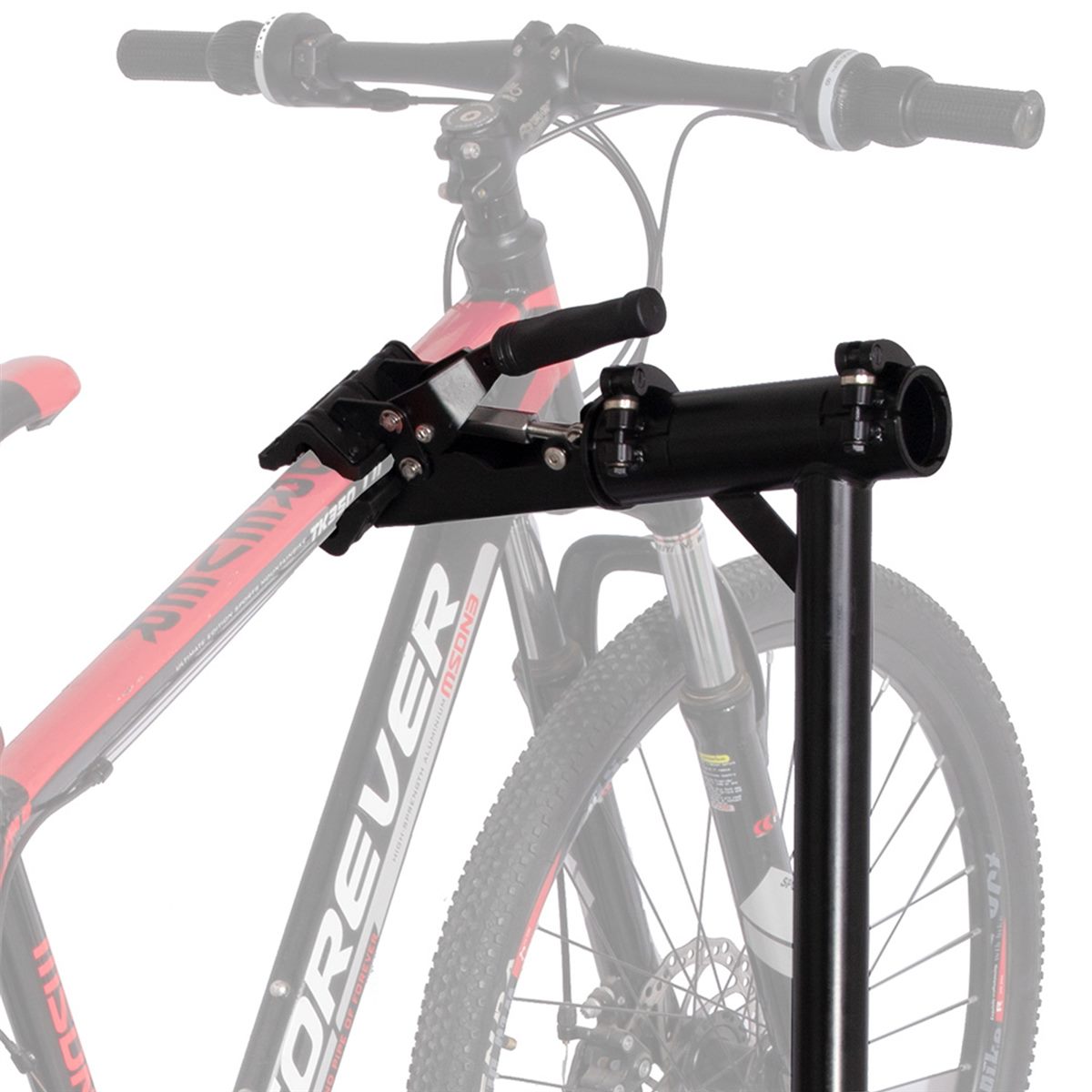
The arm carries the contact point beyond the column
The clamp head projects from the front end of the horizontal tube. In the bicycle example, that head meets the top tube while the stand’s upright remains to one side. The gap gives a mechanic space between the bicycle and the column, which matters when reaching the frame area around the clamp.
The two collar levers are behind the head along the outer sleeve. Below them, the diagonal brace links the sleeve to the upright. The arm, brace and upright form a triangle at this junction. A buyer can follow this physical connection from the clamp back to the column, without confusing the arm collars with the bicycle clamp handle.
The jaw handle works at the bicycle end
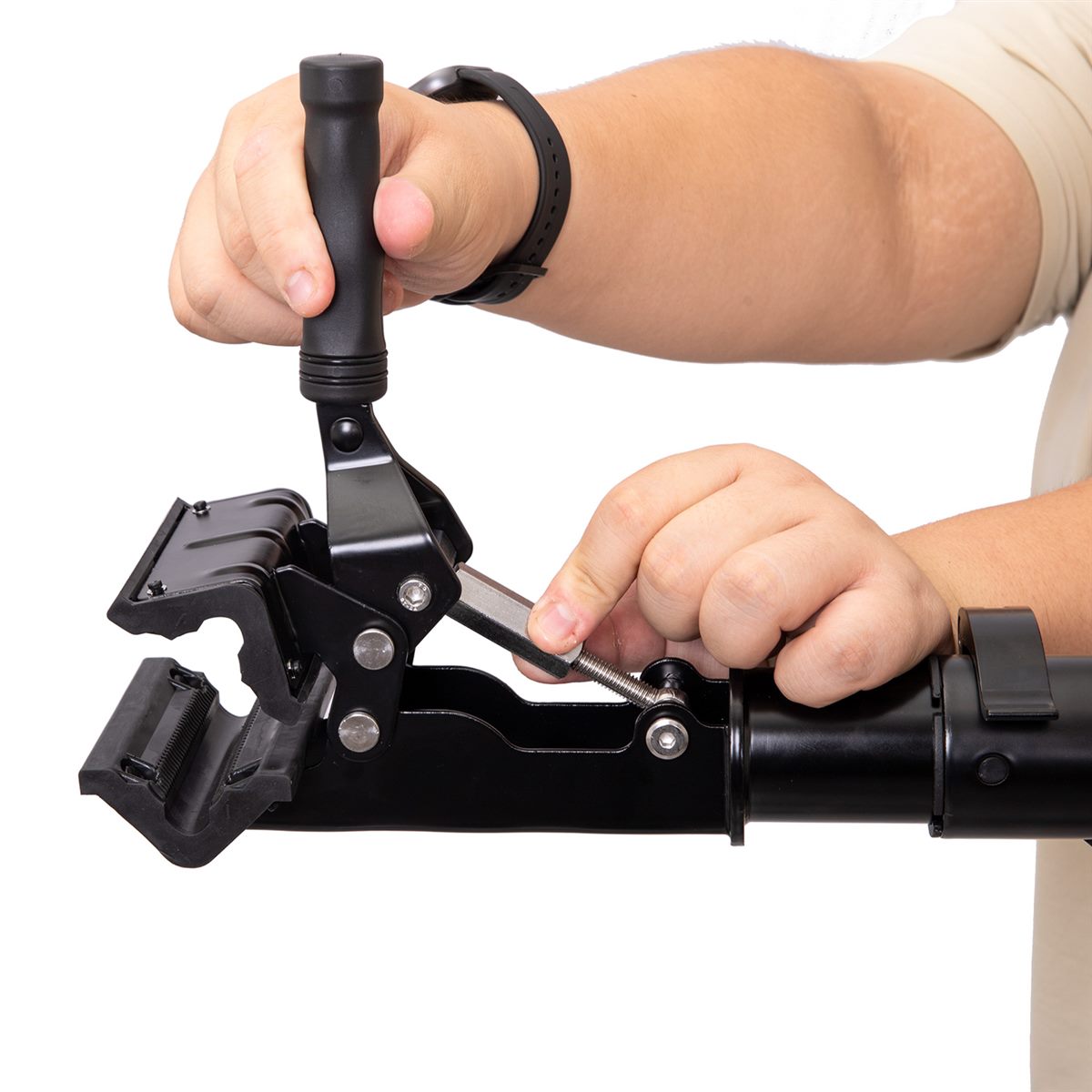
The long handle operates the jaw linkage at the front of the arm. A threaded link joins the mechanism behind the jaws, and the contact faces have a shaped opening for the selected tube. The arm collars remain farther back, where the horizontal tube enters the sleeve.
Those locations make the work sequence easier to understand. The stand’s own joints establish the position of the head. The jaws then connect the bicycle at an approved clamping point. Bicycle makers’ instructions determine whether the selected frame tube or seatpost can be clamped and the permitted force.
The bicycle’s wheelbase extends beyond the clamp in both directions. Positioning a service station therefore needs room around the bicycle as well as around the stand’s tripod feet. The actual clamp location controls where the frame sits in that work area.
View the repair stand range for different support arrangements, or send Hongsen a CS-XL-03 enquiry for this sleeve-and-brace design.