Hongsen products / Repair stand clamp controls
Rotating Clamp Controls on the HS-QX-006K Bike Repair Stand
Explore the HS-QX-006K clamp arm, rear handle and jaw lever, and see how the head angle and bicycle contact shape its workshop use.
The Hongsen HS-QX-006K separates the direction of the repair stand clamp from the opening between its jaws. A handle sits behind the upright at the rear of the clamp arm, while a silver lever sits above the red jaw covers. These controls relate to different parts of the work position, the angle of the holding head and its contact with the bicycle.
For a buyer selecting a workshop stand, this distinction helps explain the product beyond the general phrase rotating clamp. The head needs to face the required working direction, and the jaws need to meet the intended bicycle clamping point.
Follow the clamp arm from the rear handle to the jaws
On HS-QX-006K, the arm passes across the top of the upright and projects toward the bicycle. The rear handle is behind that support. Farther forward, a round toothed collar sits around the arm near the clamp head.
The product’s angle illustration shows the covered jaws in different orientations around the arm. The holding head can therefore change direction while remaining at the end of the same arm. This changes the bicycle’s working angle at the clamp, rather than changing the spread of the floor base.
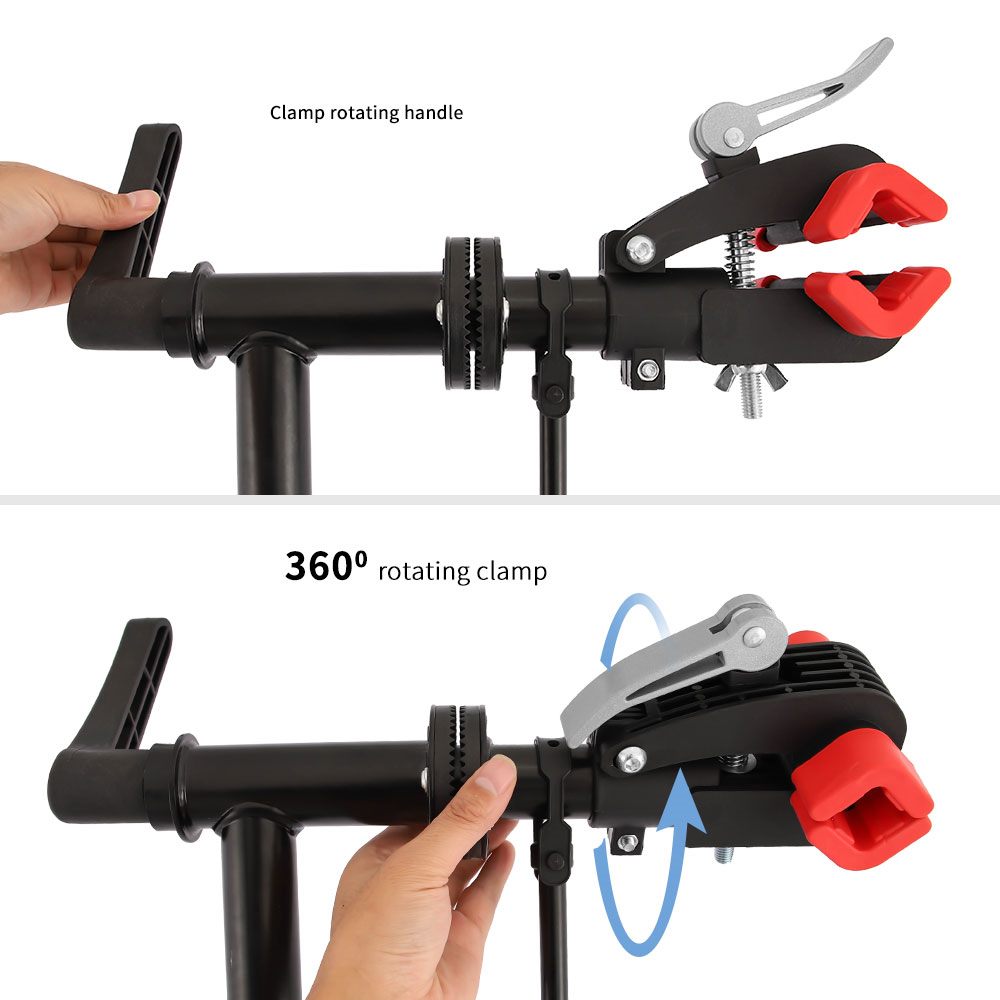
The red jaw covers identify the bicycle contact area. The silver lever above them belongs to the jaw assembly, separate from the handle behind the upright. Keeping those locations distinct makes the control layout easier to understand when comparing the stand with another model.
Separate working angle from bicycle contact
A useful working angle and a suitable clamping point answer different questions. Changing the head’s direction places the bicycle in the orientation wanted for the job. The jaws still need to meet a clamping point approved for that bicycle.
The installed 006K places the bicycle beside the upright, with its wheels clear of the floor and its frame at the red-covered jaws. This side position leaves the wheels and drivetrain available around the held bicycle. The stand’s base remains below the work area.

When comparing stands for a workshop range, examine access to the rear handle as well as the jaws. The rear handle needs room behind the upright; the jaw lever needs room at the bicycle. A wall or neighbouring bench can affect those two areas differently.
Describe the complete control layout
For HS-QX-006K, a clear product description connects the rotating head to its position on the arm and identifies the jaw control separately. This gives dealers a useful explanation of how the stand organises the bicycle’s working position, instead of relying on an angle label alone.
Compare the complete model in the Hongsen bike repair stand range. Contact Hongsen to discuss HS-QX-006K and the clamp arrangement required for your workshop product range.