Repair stands / Workshop layout
Wall or Bench Mount Bike Repair Stands: Choosing a Fixed Workshop Setup
Choose a fixed wall or bench setup from the actual workshop layout, then compare a floor-supported form when the area must be cleared.
HS-QX-006W belongs on the shortlist when a workshop plans to keep a bicycle repair station ready in one position. The model mounts to a wall or bench and carries an adjustable clamp on a fixed support arm. That format removes the need for a separate stand base in the same floor area, though the operator still needs clear working space around the bicycle.
Decide whether the repair position should remain part of the workstation after the current job ends. If the answer is yes, HS-QX-006W can fit the layout. If the area must return to another use, a floor-supported and foldable form deserves comparison before the workshop commits to a fixed mount.
A fixed repair station still needs operating room
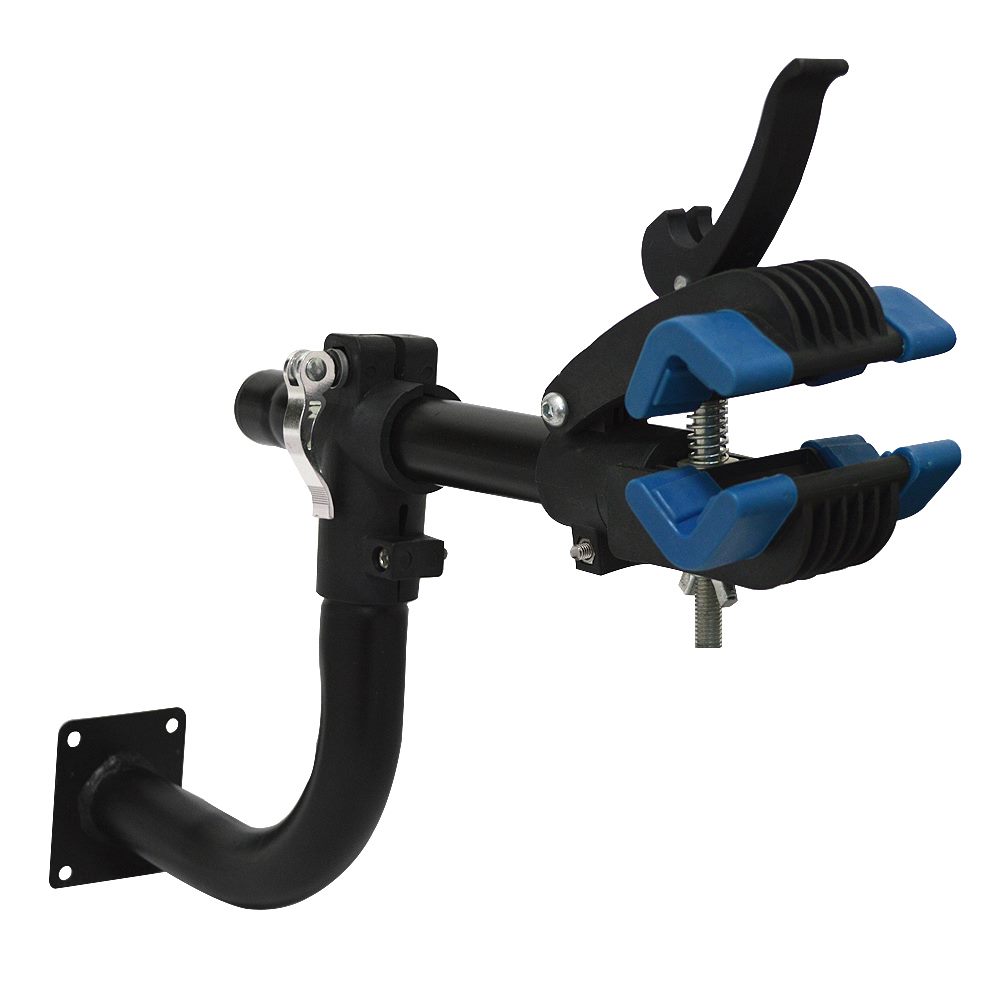
The absence of a floor base solves only one part of the layout. A mounted bicycle extends into the room, and the person doing the work needs access around the relevant side of the bicycle. In a narrow service area, placing the clamp close to a wall can save base footprint while still creating a blocked passage or an awkward working direction.
Start with the intended bicycle position. Mark where the bicycle would sit, which side faces the main aisle and where the operator stands for the usual service task. The position of the HS-QX-006W mounting plate and support arm can then be reviewed against that layout. Confirm the plate dimensions, hole pattern and projection from the current model drawing, then agree who will assess the support and specify the mounting hardware.
Wall mounting and bench mounting solve different layout problems
A wall position can keep the bench surface available, but it fixes the bicycle’s position in relation to the wall and nearby passage. The buyer should choose the bicycle’s direction first, then check whether the planned position leaves practical access for the work done at that station. Check the wall’s support and mounting arrangement before selecting that location.
A bench position ties the clamp to the workbench instead. This can suit a station already organized around that bench, provided the mounted bicycle and support arm do not consume the surface needed for tools or other work. The bench itself must be assessed for the intended mounting arrangement.
| Site condition | Better first candidate | Selection reason |
|---|---|---|
| One repair position remains set up beside a suitable wall | HS-QX-006W wall mount | Keeps the holding point fixed while preserving the bench surface |
| The workbench defines the repair station and has usable mounting area | HS-QX-006W bench mount | Places the holding point at the bench, subject to surface use and support review |
| The area must be cleared for other work after use | Compare HS-QX-006L | Compare its floor-standing layout and folded dimensions with the available work and storage areas |
A shared work area changes the choice
For a workshop that uses one area for repair and other tasks, check how that space will be used after the bicycle is removed. The floor-standing, foldable HS-QX-006L is worth comparing when a fixed wall or bench position would restrict the next task. Compare its setup and folded dimensions with the available working and storage areas.

Keep clamp fit separate from workstation fit
A good workstation layout still needs a clamp that fits the target bicycle. HS-QX-006W has an adjustable clamp, so check its current clamping range and intended contact position against the bicycle or component you plan to hold.
Review the HS-QX-006W product page and the wider Hongsen bicycle repair stand range before choosing your workstation format. Contact Hongsen to discuss the intended mounting position and bicycles before you select the model.